























RO Water Purifier in Nepal: Is It Worth Buying
Clean and safe drinking water is becoming an issue in most regions of Nepal. In cities where the sources of water can be polluted or uneven in quality.
As there is a growing consciousness of health and hygiene. The number of households which are resorting to water purification systems has increased in order to have safe drinking water. RO(reverse osmosis) water purifiers have become very popular among the available alternatives. Because of their capacity to eliminate impurities, poisonous chemicals and dissolved solids.
In this guide, we will discuss the operation of RO water purifiers, their advantages and disadvantages. Whether they are the correct decision for you or not!!
What is an RO Water Purifier?
An RO water cleaner is a filter used to filter out impurities from water using a membrane, which acts as a filter. It is attached to filter out salts, metals, germs, infections, and other hazardous impurities present in water, making it drinkable.
An RO purifier operates at a microscopic level unlike the simple water filters that only eliminate the visible particles. It forces the water to go through a special membrane that only permits the passage of clean water molecules and not the contaminants like lead, arsenic, chlorine and excess minerals.
How RO Purification Works?
The RO (Reverse Osmosis) purification technique involves a multi-step filtering process in which all visible and tiny pollutants are eliminated from the water. This process is carried out in order to make sure that the water you consume is tidy, safe, and without all kinds of contamination.
Step 1: Pre-Filtration
The first filter is made of water, sediment and carbon. These filters eliminate dust, dirt, rust and chlorine and ensure that the RO membrane is not damaged and the overall performance is enhanced.
Step 2: RO Membrane Filtration
This is what the system is all about. Water passes through a semi-permeable membrane which prevents the dissolved salts, heavy metals, bacteria and other undesirable elements. Only pure water molecules are permitted to pass through.
Step 3: Post-Filtration
The water can be further filtered with other filters like carbon filters or UV purification to eliminate any other impurities left and also enhance taste after RO filtration.
Step 4: Storage
The clean water is kept in a tank, which is used whenever it is required.
The multi layered process of RO purifiers is very effective, particularly in areas where water quality is not consistent. It makes water, even the mixed or unreliable water, safe enough to be consumed on a daily basis.
Common Water Quality Issues in Nepal
The quality of water in Nepal is highly variable in terms of the source, place, and time of year. In most places, particularly in urban locations such as Kathmandu, families use a combination of municipal supply, tanker water and underground water. This exposes the chances of contamination and poor quality water.
High TDS (Total Dissolved Solids), which is comprised of extra minerals, salts, and metals, is one of the most common ones. Although some of them are harmless, when taken in huge quantities, they might disturb taste, as well as health, in the long run.
Microbial contamination is also another significant issue. Water may be contaminated by bacteria, viruses, and parasites that may be caused by improper sanitation, pipeline leakages, or storage tanks. This may cause waterborne diseases in case not treated.
Water can also be contaminated with chlorine, sediments and bad smells particularly when obtained through tankers or when kept in long storage. The above aspects render untreated water inappropriate to be consumed directly.
Benefits of Using an RO Water Purifier
There are a number of benefits associated with RO water purifiers when the quality of water is questionable. They are increasingly becoming a favorite in Nepal among households and offices that seek safe and reliable drinking water.
- Removes Harmful Contaminants
An RO purifier can be used to remove the dissolved salts, heavy metals such as lead and arsenic, and other toxic chemicals. In this way, the water is made very safe as compared to the raw sources.
- Protects Against Bacteria and Viruses
A multi-step water filtration system, in most instances including UV/Ultra-Filtration, is applied to eliminate or inactivate microorganisms that may potentially cause water-borne diseases using the RO system.
- Improves Taste and Odor
The RO water filter eliminates chlorine, sediments, taste and odor-altering impurities, and leaves the water purer and more palatable to you.
- Suitable for High TDS Water
RO is among the best options to reduce the TDS in your water supply in case it is high (which is typical of tanker or underground water).
- Convenient and Reliable
RO purifiers once installed will give a continuous supply of clean water at home eliminating the need to use bottled water or boiling.
- Long-Term Cost Saving
It might be more expensive in the short run, but an RO purifier could save money in the long run as it would not be necessary to purchase bottled water on a regular basis.
Drawbacks of RO Water Purifiers
Although RO water purifiers have numerous advantages, they also have some disadvantages that you should take into consideration before buying them.
- Water Wastage
Among the largest drawbacks of the RO systems is that they use a certain volume of water in the purification process. A few liters of purified water can be discarded per liter of purified water and this can be problematic in regions where there is a shortage of water.
- Removes Essential Minerals
The purification of RO not only eliminates toxic substances but also certain minerals that are vital such as calcium and magnesium. This may render the water unhealthy unless the system incorporates a mineral enhancer.
- Higher Initial Cost
Water purifiers that use RO are usually of higher cost than the simple filters such as the UV or UF filters. Initial investment can be a determining factor to a large number of households.
- Regular Maintenance Required
RO systems require maintenance such as the replacement of filters and membranes. This contributes to the cost in the long term and it has to be taken care of to sustain performance.
- Requires Electricity
The majority of RO purifiers require power. This may be constrained when there is a power outage unless the system has a backup.
- Not Always Necessary
When you have low TDS in water already and the water is quite clean, then you may not need an RO purifier. In those cases, less complex filtration techniques can be more appropriate.
RO vs UV vs UF
Selecting a water purifier in Nepal, should know the difference between RO, UV, and UF systems. The technology is specific to certain conditions of water, and the most suitable one is determined by the water source and quality.
RO (Reverse Osmosis)
RO purifiers are suitable in water that has high TDS like tanker or underground water. They eliminate dissolved salts, heavy metals, and toxic chemicals, which makes them the best in regions where the quality of water in questionable.
UV (Ultraviolet)
UV purifiers take advantage of the ultraviolet light to kill bacteria and viruses. They can be used in water that has already been cleared but can have microorganisms. Dissolved salts or chemicals are not removed by UV systems.
UF (Ultrafiltration)
UF filters work on the basis of a membrane to eliminate bacteria and suspended particles. They do not need electricity and suit well in the region where the water has low TDS, yet is ineffective in removing dissolved impurities.
How to Choose the Right RO Water Purifier
The selection of an appropriate RO water purifier will be based on the quality of water, usage and cost. There are numerous choices in Nepal to choose a system that suits your real requirements.
- Check Your Water Source and TDS Level
Begin by knowing your source of water, whether it is a municipal source, tanker or ground. In case the TDS concentration is high, an RO purifier is a good option. In case of low TDS water, a complete RO system may not be necessary.
- Look for Multi-Stage Purification
Contemporary purifiers tend to be a combination of RO+UV+UF. This gives it greater protection by eliminating dissolved impurities, bacteria and viruses.
- Consider Storage Capacity
Select a purifier that will fit your home requirements in terms of storage tank size. The bigger families are supposed to have a higher capacity to guarantee that there is a constant water supply.
- Check for Mineral Retention Features
RO eliminates vital minerals, so consider models that have a TDS controller or mineralizer to have healthy drinking water.
- Evaluate Maintenance and Service
It is essential to service the performance regularly. Select a brand or a supplier that is easy to maintain and has good after sales services.
- Compare Budget and Long-Term Cost
Not only the initial price but also the cost of replacement of the filter and servicing in the long run.
- Choose a Trusted Brand
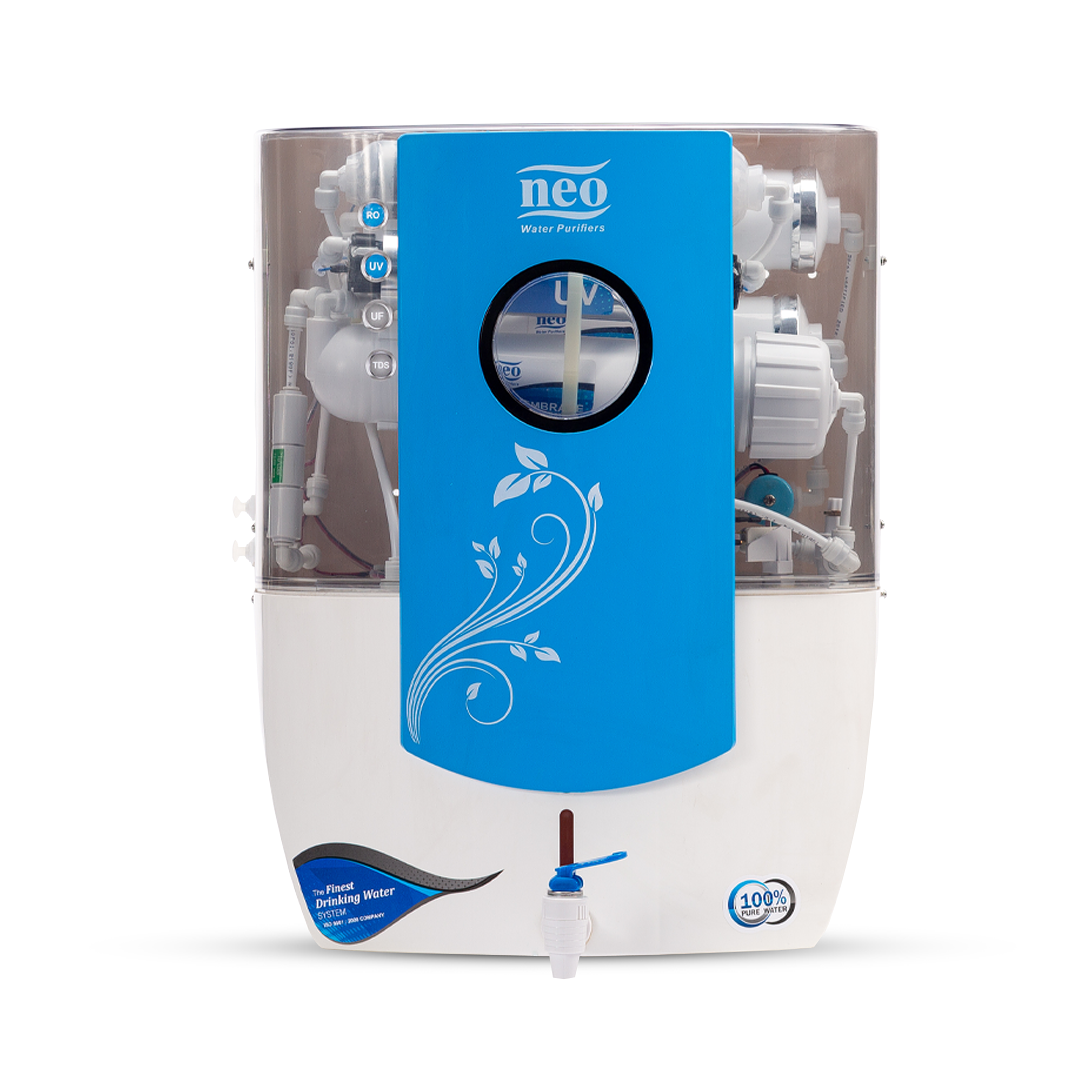
When selecting a purifier, it’s important to choose a reliable brand with proven performance and service support. Brands like Faber and Neo offer a range of RO water purifiers suitable for Nepal’s varying water conditions, along with dependable after-sales service.
Maintenance and Filter Replacement
In order to maintain your RO water purifier in a good working state, it is important to maintain it. Over time, filters and membranes become blocked with impurities and this may decrease performance and water quality.
A majority of RO systems need:
- Pre-filters (sediment/carbon) change every 1-3 months, depending on water quality.
- Replacement of the RO membrane after every 1-2 years.
- At least once a year general servicing.
Is RO Water Safe and Healthy?
Yes, RO water is usually safe to drink since it eliminates toxic contaminants, heavy metals and microbes. This renders it a good choice in regions where the quality of water is doubtful.
But, as RO also takes away some important minerals, it is preferable to have a purifier that has a mineralizer or TDS controller. This aids in sustaining an even proportion of minerals and this makes the water safe and healthy to consume on a daily basis.
Who Should Buy an RO Water Purifier?
Although it is not necessary for all to have an RO water purifier, it is highly suggested in some situations. You need to think about purchasing an RO purifier in case:
- High levels of TDS in your water
- You depend on tanker or underground water
- Your water has a bad taste, smell, or visible impurities
- You reside in cities such as kathmandu where there is mixed water
Not Sure about whether you need an RO water purifier in your house? Guessing is not an option, you should test your water and make the correct decision regarding the health of your family.
At Nebha Traders, we offer quality and dependable water purification services to homes and companies in Kathmandu. We will be with you to provide the best system depending on your water requirement, whether it is through the advice of an expert or professional installation and after sales services.
Visit or contact Nebha Traders today and take the first step toward clean, safe, and healthy drinking water for your family.
Conclusion
RO water purifiers are a good investment for most households in Nepal particularly where the quality of water is not constant or is polluted. They provide superior purification, enhanced taste and tranquility as far as health and safety are concerned.
Nevertheless, they cannot be a universal solution. It will be determined by the source of water, the level of TDS and the budget. An RO purifier is certainly worth investing in, if the quality of your water is bad. However, when your water is already safe then you might not require such a sophisticated system.
Frequently Asked Questions (FAQs)
It depends on the quality of your water. A RO purifier is very much suggested in most mixed water sources in urban regions.
RO eliminates the majority of dissolved minerals, whereas the modern systems have mineralizers to ensure a balanced system.
During the process of filtration, RO systems may consume some water, although new models are more effective than the old ones.
The safe and acceptable range of TDS is 50-150 ppm, which is considered to be safe and drinkable.
In the case of low TDS water, a UV or UF purifier can be used.