





















How a Kitchen Chimney Improves Indoor Air Quality
The kitchen is one of the most commonly used spaces in any house and is a major contributor to indoor air pollution. In everyday cooking, smoke, steam, grease particles, and odors can affect comfort and health if they are not well-ventilated.
During the confinement of the kitchen in most households, particularly in urban places, there is minimal or less ventilation of the kitchen, which traps the pollutants in the interior. In the long run, it may result in low indoor air quality, bad odors, oily surfaces, and even respiratory discomfort for the people living in the house.
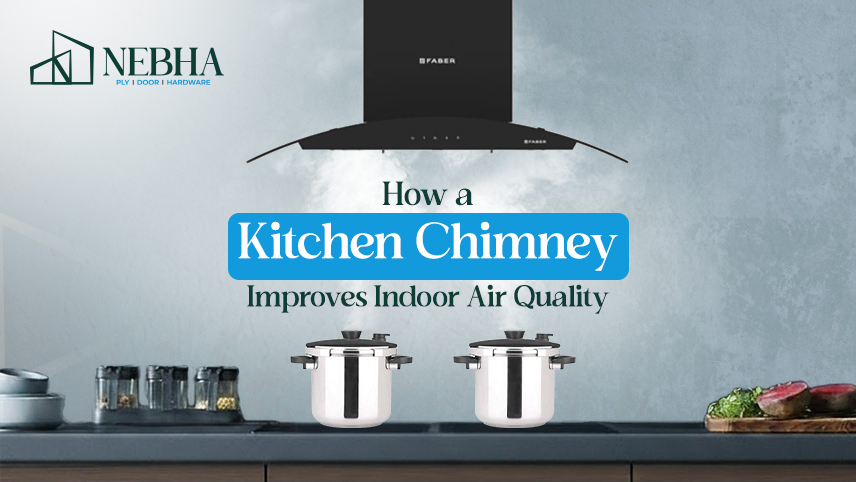
Another way to ensure a healthy and clean cooking environment is to install a kitchen chimney. A chimney removes smoke, grease in the air, and fumes, keeping the kitchen clean and enhancing the quality of indoor air.
Common Causes of Indoor Air Pollution in Kitchens
It is not known to many that one of the largest sources of indoor air pollution in a house is the kitchen. Cooking activities that are daily emitted different pollutants that might influence the quality of air and the general comfort in cases where they are not ventilated.
The kitchen air pollution can be due to some of the common causes, such as:
Cooking Smoke and Fumes
High-heat cooking, frying, and grilling emit smoke and fumes, which have small particles that are dangerous to inhale in the long term.
Oil and Grease Particles
Oil cooking leaves behind grease particles in the atmosphere that accumulate on the surfaces of walls, cabinets, and appliances, making them sticky and unpleasant to touch and smell.
Gas Combustion Emissions
Gas stoves emit gases such as carbon monoxide and nitrogen dioxide, which would impact the indoor air quality, provided there is poor ventilation.
Steam and Moisture
During boiling and cooking, a lot of moisture is generated, which may lead to dampness, the growth of molds, and discomfort in confined kitchens.
Food Odors
Powerful smells of food may permeate the house, and hours can pass without the food being ventilated.
How a Kitchen Chimney Works?
A kitchen chimney is a device meant to help in eliminating smoke, oil particles, heat, and cooking smells in the kitchen to maintain clean and comfortable air during cooking.
The chimney is normally fitted over the cooking stove. It has a potent suction motor and filters that collect the air pollutants produced during the cooking process.
Here’s how it works:
- Coking provides smoke, fumes, and grease particles; the chimney pulls the contaminated air into the chimney using its intake panel.
- The oil and grease particles are captured using the filters within the chimney, avoiding their spread in the kitchen.
- The contaminated air is recirculated and purified into the kitchen, and in ducted models, this is vented to the outside by a duct system.
Removes Smoke and Harmful Gases
Among the greatest advantages of having a chimney installed in the kitchen is that everyone can eliminate the smoke and poisonous fumes generated during cooking. Frying, grilling, or even cooking at a high temperature produces smoke and fumes that are easily dispersed in the kitchen if it is not well ventilated.
Houses that have gas stoves cooking, gases like carbon monoxide and nitrogen dioxide are also released in the process of cooking, and this may affect the indoor air quality negatively when they accumulate in enclosed spaces.
The kitchen chimney keeps on drawing off the smoke and the fumes of cooking, and either leads it out or cleanses it and reuses it again. This also ensures that the kitchen is kept cleaner and that the air does not experience any pollutants that can cause irritation or difficulty in breathing.
Eliminates Cooking Odors
Preparation of food, mainly food with intense spices, frying, or grilling, tends to leave behind residual smells that permeate the house. These smells may last several hours and even enter curtains, furniture, and clothing without proper ventilation.
A kitchen chimney will help in capturing and eliminating odor-filled air in the cooking section. Rather than letting the smells move into the house, it will lead to the chimney either blowing it outdoors of filters air and releases in into the kitchen.
Reduces Grease and Oil Particles in the Air
When cooking, oil emits microscopic-sized grease and oil vapor into the air, particularly when frying or cooking at a high temperature. In the long run, these particles accumulate on the walls, cabinets, and countertops as well as appliances and form sticky surfaces that are hard to clean.
A kitchen chimney can help to minimize the issue by retaining the grease particles with the built-in filters before they can diffuse across the kitchen. This makes the surfaces less dirty and avoids the accumulation of oily grease.
Improves Overall Kitchen Comfort
A kitchen chimney not only increases the quality of air but also increases the comfort of cooking. Preparing meals in an environment where it is smoky, hot, and strongly smelling can soon prove to be uncomfortable, particularly when one has to cook over a prolonged period.
A chimney also makes a kitchen rely on a chimney to keep the room cooler and more comfortable by constantly getting rid of smoke, excessive heat, and grease that is floating around in the air. This makes the food preparation easier and less heat-induced, and reduces air circulation discomfort.
Chimney vs Exhaust Fan: Which Is Better?
The question many house owners ask themselves is which between a kitchen chimney and an exhaust fan is the best solution for kitchen ventilation. Although the two can be used to eliminate polluted air, their effectiveness and performance are considerably different.
The primary purpose of the exhaust fan is to eliminate hot air and a portion of smoke in the kitchen, but it does not effectively trap grease and oil particles. This makes the grease be deposited on walls and cabinets, and therefore it is hard to clean without cleaning it often.
A chimney in the kitchen is directly located over the cooking space and is specifically fitted with the aim of trapping the smoke, fumes, odors, and grease particles at the point of origin. It is better at catching the polluted air, and the suction system is more efficient in catching the oil particles.
Tips for Choosing the Right Kitchen Chimney
It is worthwhile selecting an appropriate kitchen chimney to make sure that it will be well ventilated and give long service. There are numerous models to choose from as well; there is a large difference between the models you choose based on your kitchen set-up and cooking style.
Here are some practical tips to help you choose the right chimney:
Choose the Right Size
The size of the chimney must be equal to or a little bigger than your stove or cooktop to capture smoke and fumes.
Check Suction Capacity
Houses with regular or heavy cooking practices should install chimneys with a greater suction capacity where the smoke and grease ought to be eliminated effectively.
Select the Appropriate Filter Type
Various chimneys apply baffle filters, cassette filters, or filterless systems. Indian and Nepali cuisines tend to utilize more oil and spices, and therefore, baffled filters are commonly used.
Decide Between Ducted and Ductless Models
Ducted chimneys are more efficient and force the air out of the house, whereas ductless chimneys block and recycle air in cases when an external ducting system is not available.
Consider Noise Levels
A less noisy chimney is more comfortable, particularly in an open kitchen design that has a connection with the living areas.
Look for Easy Maintenance Features
Auto clean and easy filter removability make the maintenance process easier and enhance the performance of the chimneys with time.
Maintenance Tips for Better Performance
It is important to have the kitchen chimney well-maintained in order to ensure that it is still effective and that it provides good indoor air quality. The assimilation of grease and dust may minimize suction power and performance, unless it is cleaned and maintained regularly.
Some easy tips in maintenance would be:
Clean Filters Regularly
Grease and oil particles are trapped by the filters; therefore, they are supposed to be washed after a certain duration to uphold the efficiency of the airflow and suction. The frequency of cleaning will be determined by the frequency of cooking.
Use Auto-Clean Function (If Available)
The new chimneys are usually equipped with an auto clean option, which removes the oil deposition in internal components, saving people the manual work of cleaning the chimney.
Wipe the Exterior Surface
Cleaning the chimney is a regular task that ensures a clean and sanitized kitchen environment.
Check Suction Performance
If you find that there is less smoke removal, then there is a possibility that there are clogged filters or that the filters need to be serviced.
Schedule Periodic Servicing
The motor, filters, and internal parts should be serviced by a professional at any time of the year and once or twice a year to ensure they are in good working condition.
Upgrade Your Kitchen with the Right Chimney from Nebha Traders
Proper ventilation is a start to a clean and healthy kitchen. The correct kitchen chimney is installed to eliminate the smoke, odors, and grease, and help your cooking area stay fresh and comfortable on a daily basis.
When you intend to renovate your kitchen or install a chimney, it is all about who to consider as a reliable supplier. Nebha Traders will provide a variety of quality kitchenware and chimney systems, as well as professional advice in choosing the most suitable one for your house.
Conclusion
A kitchen chimney is very useful in ensuring a healthy and clean indoor air since it eliminates smoke, gaseous fumes, odors, and grease dust that are produced in the process of cooking. To clean the air, it makes the surface in the kitchen cleaner, makes the maintenance less demanding, and makes the cooking process more comfortable.
A chimney provides more effective and focused air filtration than a simple ventilation solution when cooking is conducted regularly and involves a lot of frying and spices.
By selecting the correct chimney and keeping it in a good state, homeowners will be able to spend a number of years in their kitchen that is fresh, hygienic, and comfortable.
Frequently Asked Questions (FAQs)
1. Is a kitchen chimney necessary for every home?
Although not a compulsory requirement, a kitchen chimney has been strongly suggested for homes where preparation involves frying, grilling, or intensive use of oil and spices, since it is an effort to ensure that indoor air remains clean.
2. Does a kitchen chimney completely remove smoke and odors?
A chimney can greatly limit the smoke, fumes, and odors by trapping them in their sources and the air in the kitchen with a chimney is significantly cleaner than when it is positioned by natural ventilation.
3. Which is better: ducted or ductless chimney?
A ducted chimney tends to be more useful, as it blows the contaminated air away. Ductless models can be used in cases when the external ducting is not feasible, but they might also need more frequent filter cleaning.
4. How often should chimney filters be cleaned?
It can be expected of filters to be cleaned every 2-4 weeks, depending on the level of cooking and the amount of oil.
5. Does a kitchen chimney consume a lot of electricity?
No, kitchen chimneys use a comparatively small amount of electricity, and that is like a ceiling fan they are less costly to use on a daily basis.